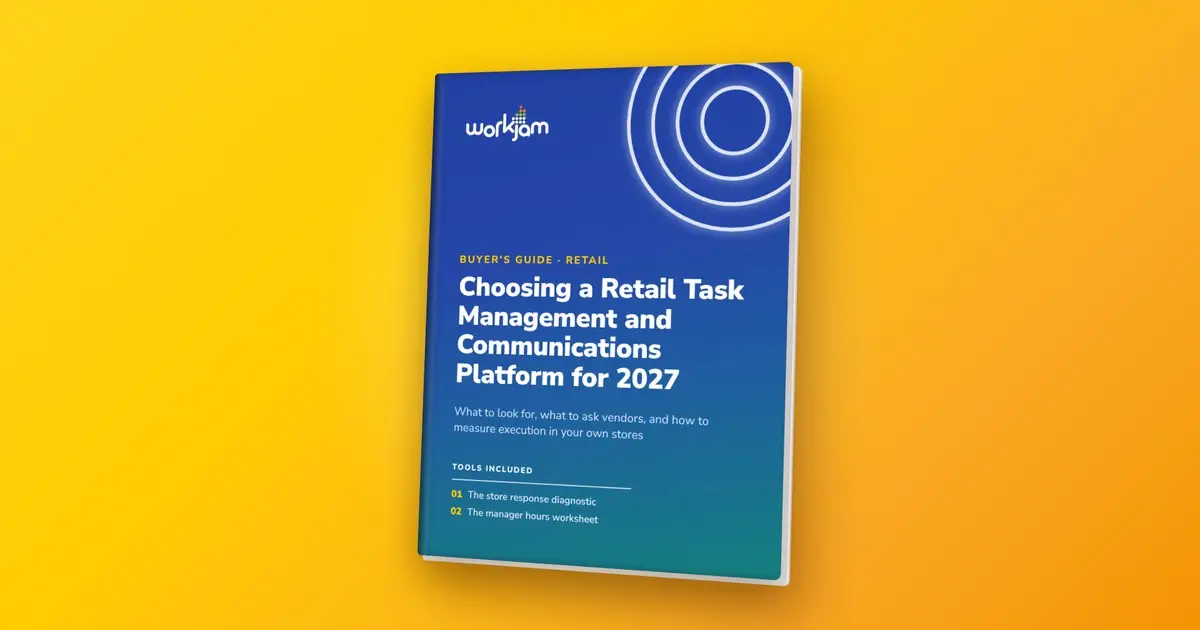
Buyer’s guide · Retail
A free guide for retail operations and IT leaders: what to look for in a platform, what to ask vendors and how to measure execution in your own stores.
Task management and store communications used to be separate purchases. That made sense when a message was just information. Today most store messages ask someone to do something, and a task without the update behind it gets done the wrong way.
AI raises the stakes. Before AI can help a store act, it needs to know what’s happening on the floor, who is working and whether the work actually got done. That isn’t possible when messages, tasks and proof of completion sit in different systems.
This buyer’s guide gives store operations and IT leaders a framework for evaluating platforms across the full path a store problem travels, from the first signal to verified completion.
A four-stage framework for judging how a platform carries a store problem from the first signal to verified completion, instead of comparing feature lists.
A ready-made evaluation checklist to bring into demos, so every vendor answers the same questions about proof, targeting, paid time and integrations.
Two self-assessment tools, the store response diagnostic and the manager hours worksheet, to baseline your own stores before you buy.
WorkJam is trusted by industry leaders






January 10 to 12, 2027, at the Javits Center in New York. Visit us at booth #5738 to talk through the guide with our team.
Look at how the platform handles a store problem from start to finish, not only its feature list. Our buyer’s guide uses four stages: intelligence (spotting what needs attention), decision and prioritization (choosing what matters most and who should act), execution (getting the work done with proof) and feedback (learning whether it worked). Also check whether tasks and messages run in one app, whether photo proof is verified, and whether work stays inside paid time for hourly associates.
Most store messages ask someone to do something. When the message and the task live in separate systems, stores get instructions with no way to track them, and head office can’t see whether the work got done. In one platform, an update can carry its task and the proof comes back to the same place.
Ask whether a message can carry the task it applies to, whether photo proof is checked before it’s submitted, and whether tasks and messages stay inside paid time for hourly associates. Then ask how results roll up by store, district and region, and which workforce management, HR and POS systems the platform connects to today. The guide includes a full vendor evaluation checklist.
The guide covers a four-stage evaluation framework, the four places store execution breaks down and a vendor evaluation checklist. It also includes two self-assessment tools: the store response diagnostic and the manager hours worksheet. It’s free to download.

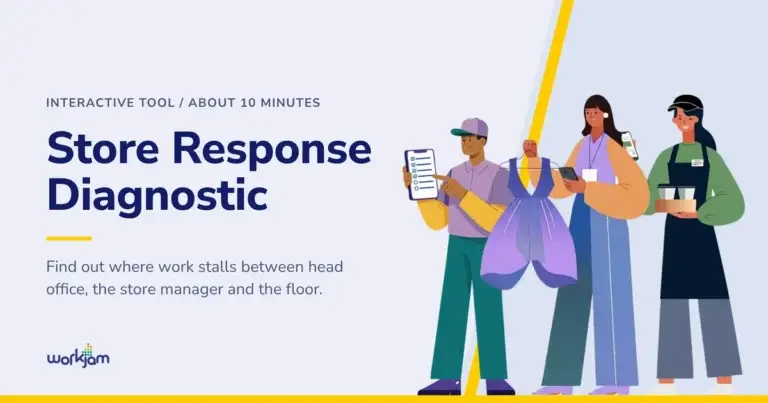
Interactive tool / About 10 minutes When something happens in your stores, how long until it's handled? Find out where work stalls between head office,...
Read More →
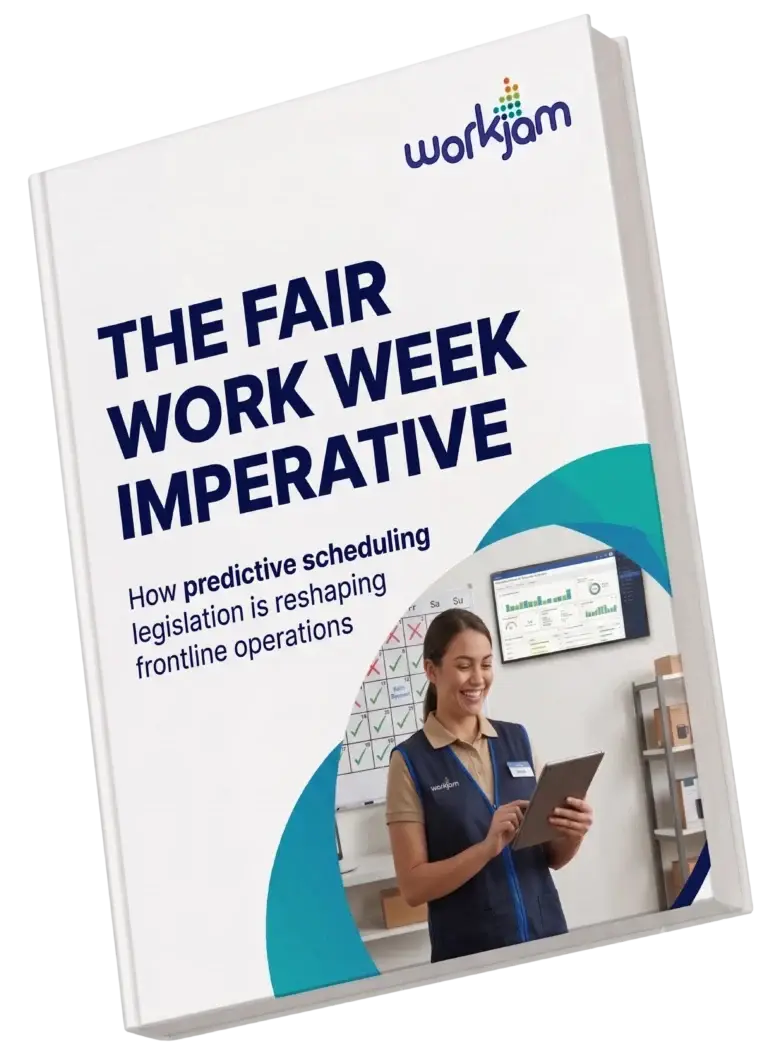
Découvrez comment vous y retrouver dans la législation relative à la planification prévisionnelle des horaires et comment transformer la mise en conformité avec la loi « Fair Work Week » en un atout opérationnel pour votre personnel de première ligne.
Read More →
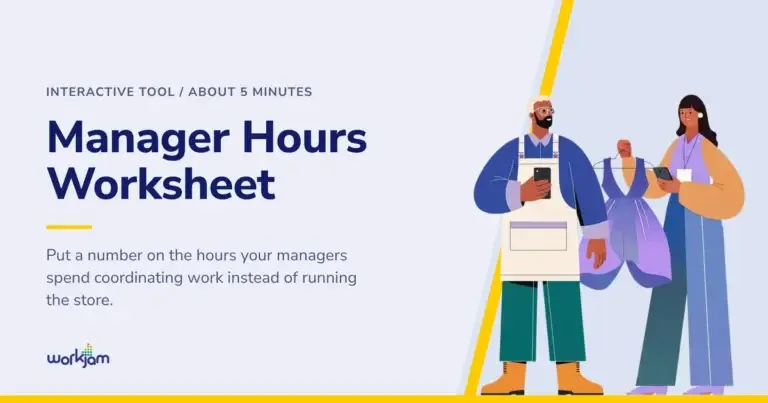
Interactive tool / About 5 minutes Where does your store managers' week go? Put a number on the hours your managers spend coordinating work instead...

Read More →
Nous utilisons des cookies pour améliorer votre expérience sur notre site, analyser le trafic et soutenir nos actions marketing. Vous pouvez choisir ci-dessous les cookies que vous souhaitez autoriser. Pour plus de détails, veuillez consulter notre Politique de confidentialité.