Tips That Changed the Way I Deliver Employee Communications
Cari Hochbein is a Senior Customer Success Manager at WorkJam with over a decade of experience helping operational leaders simplify and deliver corporate communications in enterprise retail environments.
The task of planning and distributing internal communications throughout any large organization is no small feat. Moreso, when your audience includes hourly employees (also known as frontline workers) who don’t sit in front of a desk all day and don’t have an office email address.
That physical separation creates friction for publishers of communications content who need to reach teams on the floor, in stores, or on-site with key messages quickly. It turns the divide between readership and execution into a chasm for those same publishers and the all-important message.
This article breaks down why traditional communications practices don’t always work and outlines a more practical approach you can take to publishing comms that is far more likely to deliver a unified, high-impact directive to the frontlines of any business.
Short isn’t a Strategy
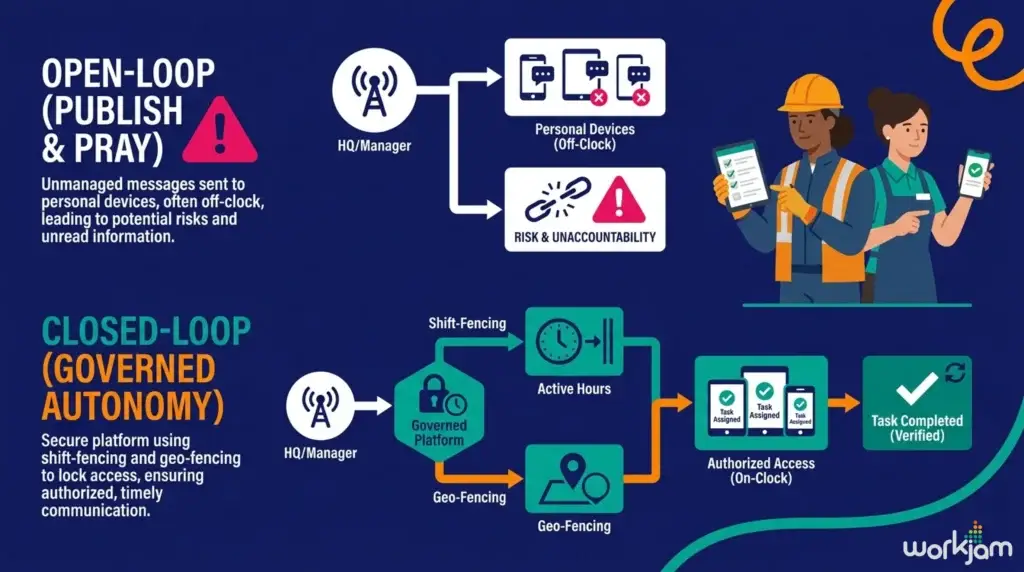
For years, comms teams have been told to keep it short and the audience will be more inclined to digest it. It’s good advice, until “short” becomes the whole plan. A shorter message that lacks the right details leads to the old “publish and pray” cycle: send it, hope it lands, and move on. Closing that execution gap isn’t just about using fewer words, it’s about planning a structured delivery.
After publishing communications for nearly a decade, I’ve picked up loads of tips and tricks. Some have stuck with me, but one completely changed the way I think about delivering a message. It is a simple, yet effective, formula that came from an all-time favorite leader of mine. It goes like this:
First, tell them what you’re going to tell them.
Now, tell them.
Then tell them what you told them.
Simple? Definitely. Obvious? Maybe. But this process will change the way you think about communication delivery. After all, Publishers are trained to be ruthless with word count. Our field audience is not sitting at a desk from 9-5, awaiting the next 900-word masterpiece. For that reason, word count will always be a great filter, but it’s not the full story. It takes more than wordsmithing to get a message to stick.
Stop Sending Messages and Start Marketing Them
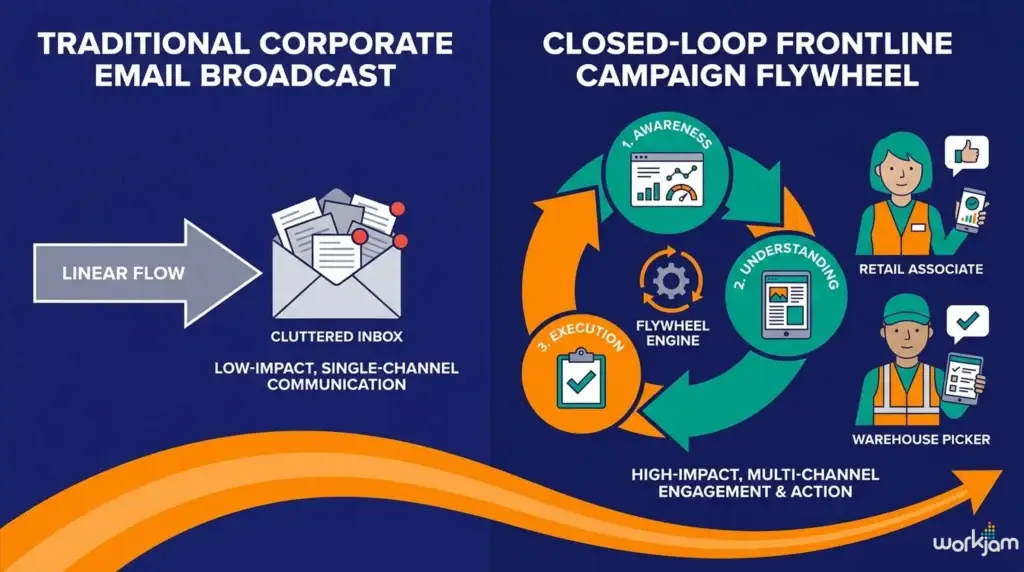
Once you start treating every message like a communications campaign, and using different touchpoints to reach your audience, things will change. Quickly. The goal is to ensure teams spend less time searching an inbox and more time actioning the information that’s relevant to them. This is a key benefit of moving beyond emailed messages to a “single pane of glass” platform that can host a campaign. Here’s how the formula works in practice.
Get Noticed
Tell them what you’re going to tell them. Think of this as the first leg of your campaign – it’s like sticking an important note on the fridge or putting a billboard on the highway. Its job is simple, to get noticed. Dashboard cards work well for this. It is not where we explain the details. It’s just the part of our campaign where we create awareness.
Build Understanding
Now, tell them the details. Once your audience sees the note on the fridge, their brain starts to ask the right questions:(What does this mean for me? What do I need to do? When do I need to do it?). Congratulations, these questions mean you’ve effectively marketed your message, and your audience is ready to click into the communication for details. Before we celebrate – let’s be honest, this is where many of us leave it and that is why the gap exists between readership and execution. So, how do we narrow the gap? We leverage the 3rd branch of the campaign and give them one central location that “tells them what you told them”.
Drive Action
Tell them what you told them. This is arguably the most important piece. You need to give your audience a clear path to action. If they have to stop and ask, “where was that information, again?” – we’ve already lost them. Building a “hub” page for your topic allows you to provide an FAQ and summarize all details in one central location. This is also the leg where task prompts remind them to act, and channel posts keep things relevant. Think about it, one short channel post gives them an opportunity to react, engage with peers and ask questions. You can even use that space to stir up a healthy competition on the topic. All of these pieces narrow the execution gap.
Right People, Right Place, Right Time [with a Twist]
As you think about structuring your campaign, consider the differences that exist within your audience. If you work in field comms, you’ve heard the saying “right people, right place, right time.” It’s a tried-and-true comm pillar, but with an asterisk. Our message will always reach different people, dealing with different issues, in different locations.
Some people will click into the details the moment they see a notification. Others might not make a move until the deadline is staring them in the face. To be fair, keeping a “clean inbox” is not why they were hired. Instead, they are shining on the floor, coaching, selling, stocking, leading. This is why they are stars on the team. And, that’s why we [as publishers] feel a deep sense of responsibility to ensure our messages reaches them. For some, having a note on the fridge [like a dashboard card] isn’t just nice-to-have; it becomes the whole reason they take action. While some appreciate a reminder; others rely on it.
Let the Platform Do the Heavy Lifting
Now, this isn’t about creating more content. No one needs more work. It’s about hosting you’re your messages in the right places, to ensure you get more mileage out of the content you already created. The platform does the heavy lifting.
Think about one of the upcoming projects or comm requests you have. How can you structure it like a campaign to better meet your audience where they are.
Can you use a dashboard card to get noticed and a channel post for questions and engagement. Rather than writing lengthy (one-size-fits-all) communications [that everyone skims], we are letting the platform do the work. We’re hosting bite-size micro messages that are more digestible and relevant. Keeping each piece short is also where you still get to flex your word count muscle. Every part of the campaign works together to take your audience beyond awareness and into action.
Frequently Asked Questions
What is the “execution gap” in internal communications?
-
The execution gap refers to the chasm between an employee reading a message and actually executing the required action.
-
This friction often occurs when publishers fail to deliver a unified, high-impact directive to teams working on the floor, in stores, or on-site.
Why do traditional communication methods fail for frontline workers?
-
Traditional methods rely heavily on standard emails and lengthy updates, which do not suit the reality of hourly employees.
-
Deskless workers do not sit in front of a desk from 9 to 5 and often lack an office email address, making it impossible for them to digest long updates during a busy shift.
What is the “publish and pray” communication cycle?
-
This cycle happens when communications teams send out a message—often too short and lacking essential details—and simply hope it lands with the audience.
-
Moving past this ineffective cycle requires planning a structured delivery, rather than just relying on a smaller word count.
How should companies structure internal communications for deskless teams?
-
Instead of one-size-fits-all messages, updates should be treated like marketing campaigns using a three-step formula.
-
First, create awareness with brief touchpoints, like dashboard cards (“tell them what you’re going to tell them”).
-
Next, provide the core details to answer their immediate questions (“tell them”).
-
Finally, summarize the information and provide a clear path to action in a central hub page (“tell them what you told them”).
How can you ensure corporate messages reach different types of employees?
-
Effective campaigns account for different work styles by delivering information to the right people, at the right place, and at the right time.
-
While some employees might click notifications immediately, others who are busy coaching, selling, or stocking rely heavily on visual reminders and varied campaign touchpoints to take action before a deadline.
About the author:

Cari Hochbein
Senior Customer Success Manager
Cari Hochbein is a Senior Customer Success Manager at WorkJam and a dedicated expert in corporate communications strategy. With over a decade of experience at large retail organizations including Gap Inc., American Eagle Outfitters Inc., and Giant Eagle Inc., Cari's career has centered on delivering field-focused solutions that drive culture and engagement. Having spent years in the publisher seat, she draws from a deep well of operational strategies that cut through complex organizational challenges.
In 2022, Cari was recognized as a "Woman on the Rise" by the Women in Retail Leadership Circle. She earned her MBA from The Pennsylvania State University and lives just outside Pittsburgh, where she fully embraces small-town life.